Semantic Web
Modeling data, meanings, and relationships in a machine-readable way
The Semantic Web describes the idea of not only providing information as text or individual data records, but also modeling its meanings and relationships in a machine-readable way. With the help of ontologies, RDF structures, and controlled vocabulary systems, data can be linked in such a way that it can not only be displayed but also logically queried and interpreted.
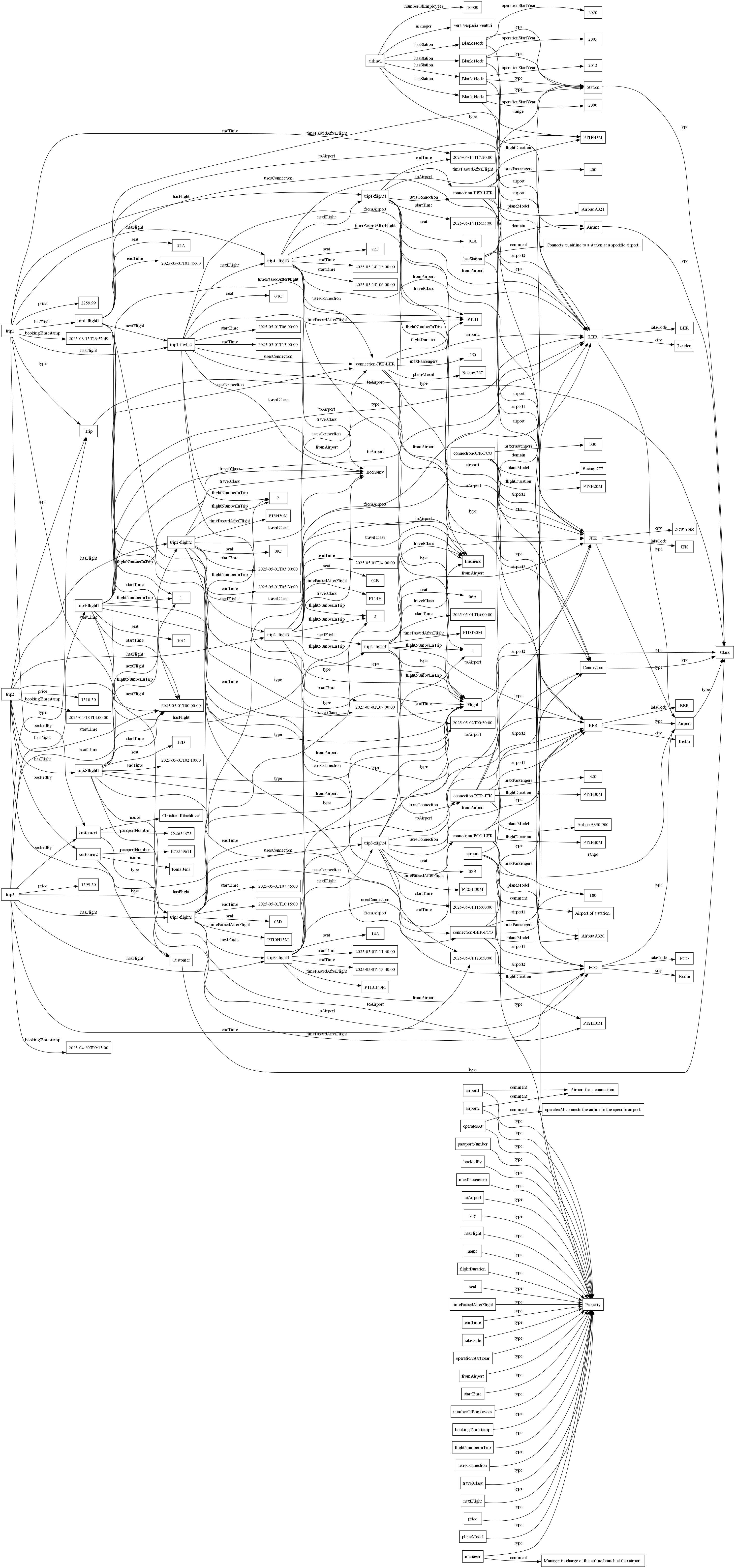
In this project, this principle was applied to a fictional airline reservation system. To this end, key entities such as passengers, flights, reservations, airports, airlines, and tickets were modeled and linked to one another. The goal was to develop a semantic data model that maps the typical processes of an airline reservation system: A person can have a reservation; a reservation refers to a specific flight; a flight connects the departure and destination airports; and a ticket links the passenger, flight, and reservation status.
The project demonstrates how Semantic Web technologies can help describe complex information systems in a structured and traceable manner. Instead of simply storing data in tables, their meanings are made explicit. This results in models that can be extended, queried, and linked to other data sources.